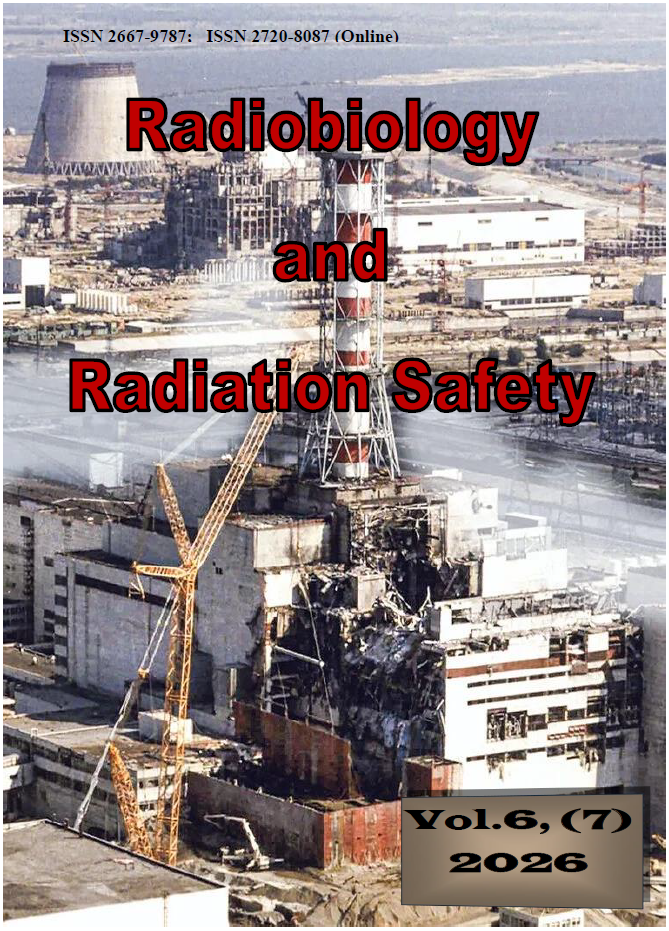
CHALLENGES IN MODERN RADIOECOLOGY FOLLOWING THE CHERNOBYL DISASTER
DOI:
https://doi.org/10.63465/rrs6202611749Keywords:
radioecology, Сhernobyl exclusion zone, ecosystem resilience, radionuclide migrationAbstract
The Chernobyl disaster remains a key factor shaping modern radioecology even decades after the event. The scale of radiation impact on ecosystems, human populations, and biota has led to a wide range of theoretical and applied research challenges. One of the central issues remains the reconstruction of radiation doses received by the population, particularly during the acute phase of 1986, when a significant portion of the total lifetime dose was accumulated. Radiation exposure caused pronounced changes in ecosystems, including the death of radiosensitive species, the formation of the “Red Forest” and the initiation of successional processes whose consequences continue to evolve. Contemporary studies emphasize the need for systematic monitoring of biota conditions, radionuclide migration, and dose assessment within ecosystems. Particular importance is attached to the long-term storage of radioactive waste, environmental risk assessment, the development of dosimetric methods, and ecological standards that consider not only humans but also the biotic components of ecosystems. The importance of studying ecosystem self-remediation processes, adaptation mechanisms, and the possible effects of low (quasi-background) radiation doses is also highlighted. Special attention is given to the development of effective countermeasures, including biodecontamination technologies and approaches to ecosystem “therapy.” The exclusion zone is regarded as a unique natural testing ground for investigating long-term radioecological and evolutionary processes, as well as for conducting integrated environmental experiments. Overall, the outlined challenges reflect the formative stage of modern radioecology as an interdisciplinary field of fundamental importance for the advancement of general ecology and for managing the consequences of technological disasters.